
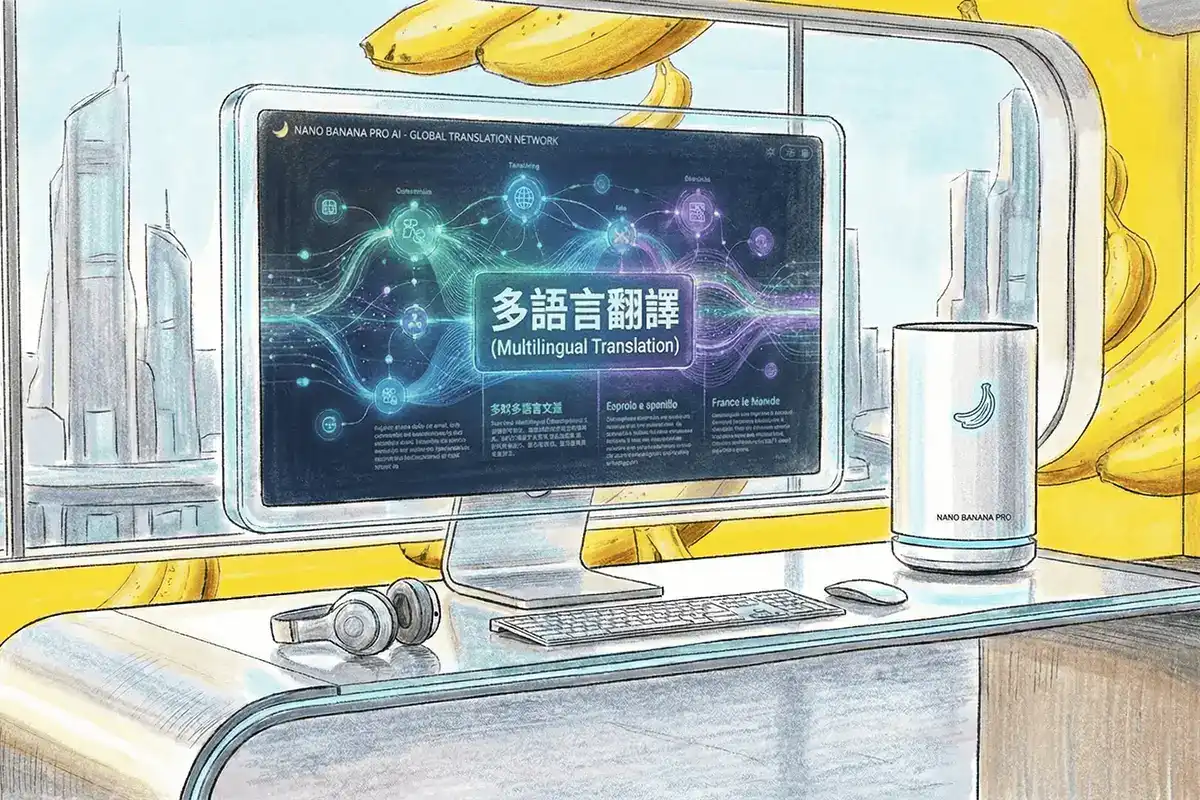
We invite you to build with our next-generation AI systems, led by Gemini, our most intelligent AI models. Nano Banana Pro represents the next level of creative control, transforming your concepts from fun ideas to professional, functional visuals. Built on the advanced architecture of Gemini 3 Pro, this new model introduces a suite of professional-grade features. From high-fidelity results with unprecedented control over every image detail to the ability to generate accurate, context-rich visuals based on enhanced reasoning and real-time world knowledge, Nano Banana Pro is changing the game. Are you ready to discover the most powerful image generation and editing model available today?
1. The Death of AI “Ghost Text”: Accurate Multilingual Rendering
For years, a major frustration in AI image generation has been the inability to produce clear, correctly spelt text directly within the image; often, the results were garbled or nonsensical, especially in languages like Chinese. Nano Banana Pro has not just improved this—it has essentially solved it.
This feature is perhaps the most immediately impactful for professionals, particularly in Asia. The model can now generate better visuals with more accurate, legible text directly in the image in multiple languages. This capability means you can create impactful posters, intricate diagrams, and detailed product mockups with sharp, legible text. Crucially, for those targeting international markets, Nano Banana Pro can translate and localise your ideas, generating localised text or translating text inside images for different locales, ready for international markets.
“Nano Banana Pro is the best model for creating images with correctly rendered and legible text directly in the image, whether you’re looking for a short tagline or a long paragraph.”
The sources show examples of generating intricate typography logos, complex phrases embedded in the scene, and perfectly translated beverage campaigns into Korean. This is more than just spell-checking; it utilises Gemini 3’s enhanced multilingual reasoning to handle depth and nuance in text generation. For Hong Kong creators, this capability instantly removes the need for tedious Photoshop cleanup, allowing direct creation of high-quality Chinese posters and Banners.
2. From Pixels to Logic: AI That Reasons and Generates Infographics
Traditional image generators are excellent at style and aesthetic, but they lack reasoning or “world knowledge.” Nano Banana Pro flips this script. Built on Gemini 3 Pro’s advanced reasoning capabilities, this model doesn’t just create pretty pictures; it uses real-world knowledge and deep reasoning to deliver precise results.
The most surprising application of this integration of knowledge is the ability to automatically generate accurate, context-rich infographics and diagrams. You can prompt NBP to visualise complex data, recipes, or even facts from the real world, and it will structure this information clearly. One successful test involved prompting NBP to research the latest financial report of a stock and generate an infographic based on the data, including the correct logo, without needing detailed design input.
- Search Grounding: The model can search Google for data first, then incorporate that data into the visual design. This is critical for data-driven outputs, but users are warned to always verify data-driven outputs as the model’s knowledge is extensive but “not infallible”.
- Visualisation Examples: The model handles complex steps, such as creating a DIY infographic explaining solar energy or detailing how to make Elaichi Chai. It can even turn handwritten notes into diagrams.
This means the AI is thinking through the meaning and structure of the information before visualising it, making it an unprecedented tool for educational content, marketing explainers, and internal communication.
3. The Unseen Leap in Consistency: Handling Up to 14 Inputs
A common challenge in AI generation is maintaining character consistency and blending multiple complex elements seamlessly. Nano Banana Pro makes a massive leap here, introducing a capability that feels almost sci-fi: the ability to blend more elements than ever before, using up to 14 images and maintaining the consistency and resemblance of up to 5 people.
This level of fidelity and input handling allows for incredibly complex creative workflows:
- Character Consistency: You can place your “cast” (up to five characters) in fresh scenes with new outfits, ensuring their identity and resemblance remain constant throughout the workflow, even when viewed from different angles and distances.
- Complex Compositions: Combining up to 14 objects/reference images allows creators to build detailed scenes, like placing 14 fluffy characters on a worn sofa in a cosy room, or combining six people into a high-fashion editorial shot.
- Prototyping and Design: Creators can turn simple sketches into realistic cars, chairs, or architectural designs, applying textures and colours from existing images, bridging the gap between concept and creation.
This massive increase in input capacity moves the model beyond simple editing into the realm of rapid, large-scale cinematic or editorial composition.
4. Studio-Quality Control: Mastering Resolution, Angle, and Light
Nano Banana Pro brings studio-quality control directly to the prompt level, providing high-fidelity results. This means users gain granular command over elements traditionally reserved for professional photo editing software.
The upgrade includes:
| Control Feature | Detail & Impact |
| High Resolution Output | Generates crisp visuals at 1k, 2k, or 4k resolution. This is crucial for print or high-end digital displays. |
| Aspect Ratio Adaptation | Adapt visuals for any platform by switching the aspect ratio at will (e.g., 1:1, 4:3, 16:9, 9:16). Crucially, you can lock the character’s position while the background is reduced or expanded. |
| Camera & Lighting | Exercise fine control over every aspect. You can adjust color grades, lighting directions, alter the depth of field (focus on a specific subject), change a shot from day to night, or apply sophisticated effects like intense chiaroscuro. |
These controls empower users to achieve highly specific artistic visions or adhere strictly to brand and platform requirements, ensuring their creations look professional everywhere.
How To Access Nano Banana Pro: A Quick Guide
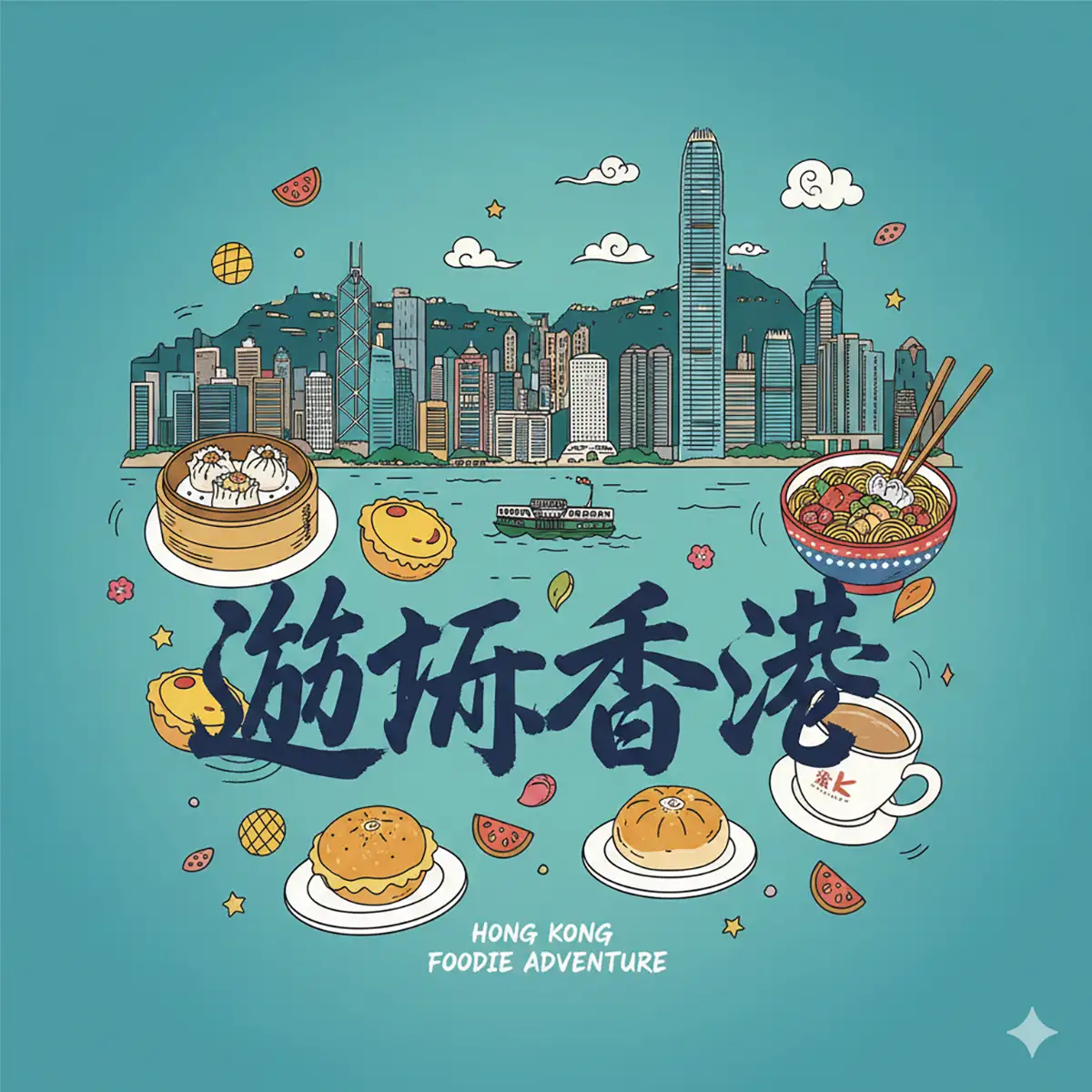
Design a Hong Kong foodie promotion poster in a teal‑blue background.
Include iconic landmarks: IFC, Bank of China Tower, Victoria Harbour with Star Ferry.
Combine local foods in flat hand‑drawn style: dim sum basket, pineapple bun, egg tart, milk tea, noodle bowl.
Use large cursive Chinese calligraphy for the headline: 『遊玩香港』.
Style: flat illustration, clean outlines, playful details, balanced composition.
Aspect ratio: 16:9, print‑safe margins, high‑resolution.

Nano Banana Pro (Gemini 3 Pro Image) is rolling out across various Google platforms. Here is how consumers and professionals can access and start using this cutting-edge tool:
Access Points:
- Gemini App/Web: To access Nano Banana Pro, select “🍌Create images” from the tools menu and choose the “Thinking” model. The original Nano Banana uses the “Fast” model for quick, casual creativity.
- Google AI Studio/API: Developers and enterprises can access NBP through the Gemini API and Google AI Studio. Note: Using AI Studio typically requires a paid API Key for full functionality.
Cost and Limitations:
- Free Tier: Free-tier users generally receive a limited free quota, often capped at around four images per day. After the limit is hit, the system reverts to the original Nano Banana model.
- Paid Users: Google AI Plus, Pro, and Ultra subscribers receive higher quotas. The cost of API use is relatively low per image generation.
- Special Offer (Taiwan Students): University students in certain regions (like Taiwan) may be eligible for a one-year free trial of Google AI Pro.
FAQs (Frequently Asked Questions)
Q: What is the core architecture of Nano Banana Pro?
A: Nano Banana Pro is the latest state-of-the-art image generation and editing model built on the foundation of Gemini 3 Pro. It is often referred to as the “Gemini 3 Pro Image” model.
Q: How does Nano Banana Pro ensure transparency regarding AI-generated content?
A: All media generated by Google’s tools are embedded with the imperceptible SynthID digital watermark. Additionally, free-tier and Pro users will see a visible watermark (the Gemini sparkle), although this visible watermark is removed for Ultra subscribers and users in the Google AI Studio developer tool. You can upload an image into the Gemini app and ask if it was AI-generated, utilising SynthID technology.
Q: What is the maximum resolution Nano Banana Pro can generate?
A: Nano Banana Pro can generate images at up to 4K resolution. This highest resolution option is typically available through the Google AI Studio interface.
Q: Does Nano Banana Pro replace the original Nano Banana model?
A: No, the models coexist. The original Nano Banana (built on Gemini 2.5 Flash) is best for quick, casual creativity using the “Fast” model. Nano Banana Pro is the best choice for advanced outputs and precise control, using the “Thinking” model. Free-tier users who hit their NBP quota automatically revert to the original Nano Banana model.
Summary: The AI Tool That Bridges Concept and Commercial
Nano Banana Pro is not merely an incremental update; it represents a paradigm shift in generative AI, moving the technology from a creative novelty to a sophisticated commercial tool. By solving fundamental issues like accurate text rendering in complex languages (like Chinese), embedding powerful real-world knowledge for data visualisation, and offering studio-level control over consistency and resolution, Google DeepMind has created a model that challenges the traditional workflows of designers and marketers.
The future of creation is here, where logic meets limitless imagination. The true power lies not just in what the AI can create, but in the speed and precision with which it executes your most complex visions.
Are you utilising Nano Banana Pro’s reasoning capabilities to gain an unfair competitive advantage in your content creation workflow?


